
As a Lead Home Repair Specialist with over a decade of experience in the Danville area, I know that when the leaves start falling heavily in October, homeowners' thoughts turn to winter preparation. One of the biggest questions we get is about the cost of new windows. It’s a significant investment, and you deserve clear, transparent information to budget effectively. Cost is often the primary concern, and my goal here is to demystify the pricing process so you can make an informed decision for your home before the first Tilton freeze sets in.
This guide will walk you through realistic price ranges, the factors that influence them, and how to get the best long-term value for your investment.
Average Costs in Tilton
When budgeting for new windows, it's helpful to think in terms of a per-window cost that includes both the window itself and the standard installation labor. Here in Tilton, the big temperature swings we experience mean that a quality installation is just as important as the window itself. The window installation cost Tilton homeowners can expect varies based on material and complexity.
Here are some general, all-in price ranges you can anticipate:
- Standard Vinyl Replacement Windows: For a good quality, double-hung vinyl window, you can typically expect to pay between $500 and $850 per window, installed. This is a popular choice and the average cost to install vinyl windows in Tilton homes falls squarely in this range. They offer excellent energy efficiency and low maintenance for a reasonable price.
- Mid-Range Composite or High-End Vinyl Windows: If you're looking for enhanced durability, different color options, or upgraded features, you might consider composite materials or premium vinyl lines. These can range from $850 to $1,300 per window, installed. They often provide a more refined look and superior structural performance.
- Wood or Fiberglass Windows: At the premium end of the spectrum, traditional wood or modern fiberglass windows offer maximum beauty and strength. These typically start at $1,300 per window and can go up significantly depending on the wood species, finish, and style. These are common in homes where preserving a specific architectural look is a priority.
Remember, these are ballpark figures. A small, fixed window will cost less than a large, operational bay window, but these ranges provide a solid starting point for your budget.
Factors That Affect Price
Two window installation projects are rarely identical. Several key variables can significantly impact the final price. Understanding the balance of window install labor vs materials pricing is crucial.
1. Window Material & Quality
- Vinyl: The most common and cost-effective option. Modern vinyl is durable, energy-efficient, and requires virtually no maintenance.
- Fiberglass: Stronger than vinyl and more resistant to expansion and contraction with Tilton's temperature changes. It can be painted and often mimics the look of wood at a lower price point.
- Wood: Offers timeless aesthetic appeal but requires regular maintenance (painting or staining) to prevent rot. It is also the most expensive option.
- Composite: A mix of materials, like wood fibers and polymers, designed to offer the strength of wood without the high maintenance.
2. Window Style and Type
- Double-Hung: The classic style where both sashes move up and down. They are a baseline for cost.
- Casement: Windows that crank open outward. They often provide a tighter seal than double-hung windows and can be slightly more expensive.
- Picture Windows: Large, fixed panes of glass that don't open. The cost is highly dependent on size and glass type.
- Bay or Bow Windows: These project outward from the house and involve multiple window units and structural work, making them one of the most expensive styles.
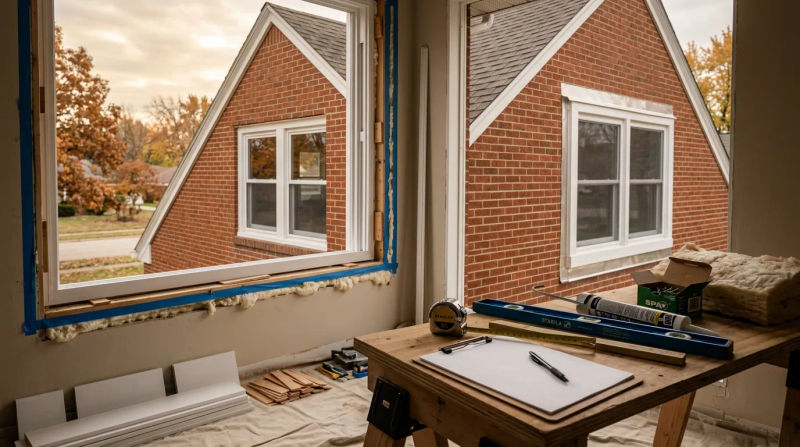
3. Labor and Installation Complexity Labor is not just about popping a new window in. Our trained technicians follow a standardized process that includes:
- Careful removal of the old window and frame.
- Inspecting the rough opening for any signs of rot or water damage.
- Precisely fitting and shimming the new window to be perfectly level and plumb.
- Insulating the gaps with foam to prevent air leaks.
- Sealing the interior and exterior with high-quality caulk.
- Hauling away the old materials.
4. Home Age and Existing Conditions Many homes in the Tilton area are 1950s-era Ranch-style houses. In my experience, these homes can present unique challenges that affect the window installation cost. Openings may not be standard sizes, requiring custom-ordered windows. More significantly, the original wood frames may have hidden rot or water damage that must be repaired before a new window can be installed properly. This adds labor and material costs but is essential for a lasting, weatherproof seal.
5. Energy Efficiency Features Upgrades like triple-pane glass, argon or krypton gas fills between the panes, and advanced Low-E coatings all add to the material cost. However, they dramatically improve your home's insulation, leading to lower energy bills and a more comfortable living space, providing a return on investment over time.
How to Get the Best Value
Getting the best value doesn't mean finding the cheapest price. It means investing in a solution that performs well, lasts for decades, and is installed correctly the first time.
- Prioritize Quality Installation: A high-end window installed improperly will fail. It can leak air, let in water, and be difficult to operate. A professional, organized installation from a reputable crew ensures your window performs as intended for its entire lifespan. This is where the labor portion of your cost provides immense value.
- Get Itemized Quotes: Ask for detailed estimates that separate the cost of the windows (materials) from the installation (labor). This allows you to compare apples to apples and understand exactly what you are paying for.
- Think Long-Term: The upfront window installation cost is only part of the equation. An energy-efficient window can save you hundreds of dollars per year on heating and cooling bills. In a few years, a slightly more expensive, better-performing window can pay for itself.
- Phase Your Project: If replacing all your windows at once isn't in the budget, consider a phased approach. You could replace the windows on the front of your house this year and the back next year. This breaks the project into more manageable financial chunks.
Questions to Ask Your Contractor
Before you sign a contract, you should feel confident in the team you're hiring. Here are some important questions to ask any potential contractor:
- Can you provide a detailed, itemized quote?
- What is your full installation process, from removal to cleanup?
- Are your installers employees or subcontractors?
- What warranties do you provide on your labor, and what is the manufacturer's warranty on the window?
- How do you handle unexpected issues, like discovering rot in the window frame?
- What steps do you take to protect my floors, walls, and landscaping during the job?
Choosing the right partner for your window replacement is a critical step. A professional team will be happy to answer these questions and explain their process in detail.
Replacing your windows is a major home improvement project, but understanding the costs involved can make the process much smoother. By focusing on quality materials and expert installation, you're not just buying new windows - you're investing in your home's comfort, efficiency, and value for years to come.
For a personalized estimate in Tilton, contact Rhyno Home Repairs LLC for a free consultation. We can provide an itemized quote to help you compare options and schedule your project before winter demand spikes.